
Enzyme-Based Concrete Alternative Absorbs CO₂ During Curing
10 mins read
10 Feb 2026
Construction is under pressure to reduce carbon emissions quickly, but concrete’s substantial footprint remains a barrier. Now, a bio-engineered building material utilizes natural enzymes to absorb CO₂ as it hardens, offering a potential carbon-negative alternative to cement.
The Concrete Carbon Bottleneck
Architects and builders face a strategic dilemma: how to decarbonize construction when its core material, concrete, carries such a heavy carbon burden. Concrete is the world’s most ubiquitous building material, yet making cement (its key ingredient) emits nearly 8% of global CO₂ – a massive slice of our climate footprint. Even as operational energy use in buildings declines with efficiency gains, the embodied carbon in materials like concrete has become a critical focus. In new ultra-efficient buildings, embodied emissions can approach 50% of total lifecycle CO₂. Regulators are responding; Europe’s Renovation Wave strategy, for instance, urges the use of recyclable, low-carbon materials in upgrades. The message is clear: without addressing concrete’s footprint, the construction sector’s net-zero goals remain out of reach.
A Carbon-Negative Alternative Emerges
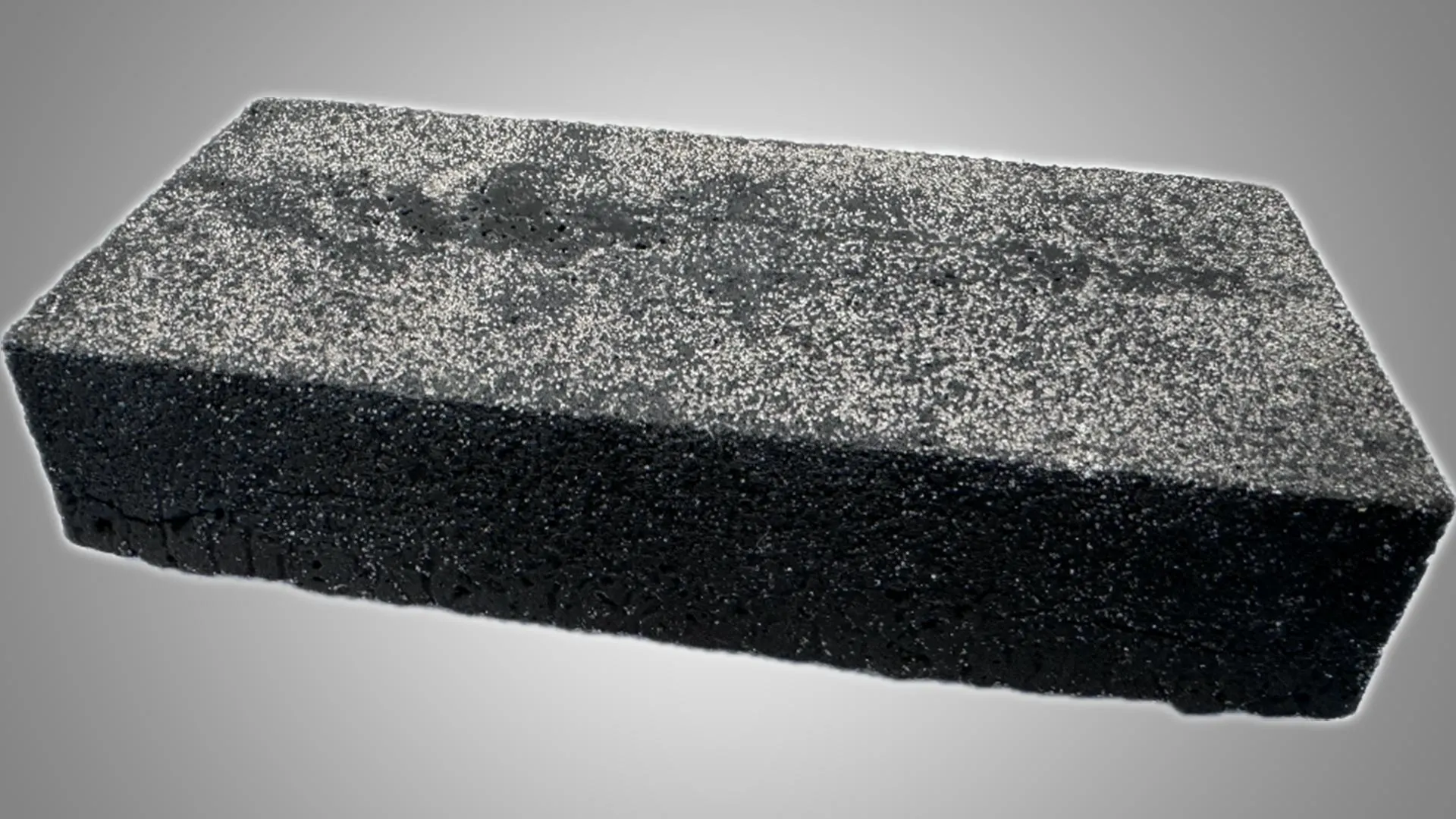
A research team at Worcester Polytechnic Institute (WPI) in the U.S. believes it has found a way around the concrete impasse. They’ve developed a new Enzymatic Structural Material (ESM) – a building substance engineered to remove more CO₂ from the atmosphere than it emits during production. In other words, ESM is designed to be carbon-negative. The breakthrough, recently published in the journal Matter, describes ESM as a strong, durable, and recyclable material that can be made with far less energy than cement-based concrete. Instead of requiring high-temperature kilns and clinker, ESM is produced through a low-energy, bio-inspired process.
Crucially, as ESM cures and hardens, it locks away CO₂ rather than releasing it. Lab tests indicate that producing a single cubic meter of ESM can sequester over 6 kg of CO₂, whereas making the same volume of conventional concrete emits roughly 330 kg. This swing from a heavy positive carbon output to a net absorption is what gives ESM its unique promise. “What our team has developed is a practical, scalable alternative that doesn’t just reduce emissions – it actually captures carbon,” explains Professor Nima Rahbar, who leads the WPI team. In essence, the material itself becomes a carbon sink during its formation, turning construction into an opportunity for carbon sequestration rather than a source of pollution.
Enzyme-Driven Curing: How ESM Works
ESM’s innovation lies in harnessing enzymes to build strength from CO₂. The WPI researchers use a naturally occurring enzyme (the same type found in living cells) that converts carbon dioxide into solid mineral particles. In the ESM manufacturing process, this enzyme (a form of carbonic anhydrase) catalyzes CO₂ and calcium ions to form calcium carbonate – essentially a limestone-like mineral – in and around a mixture of sand and a bio-based binder. Those freshly created mineral particles bind the mix together, and the material cures under mild conditions, without the high heat or pressure that traditional cement demands. The result is a solid block that can be molded into structural shapes within hours.
This rapid, enzyme-activated curing stands in stark contrast to Portland cement concrete. A standard concrete element often needs several weeks to reach full strength, not to mention carbon-intensive kilns to produce the cement itself. ESM, by comparison, sets in a matter of hours at room temperature, dramatically cutting the time and energy needed to make structural components. Early tests also show that ESM achieves compressive strengths on the order of 25 MPa – meeting the minimums for structural concrete – and it exhibits greater water resistance than many previous bio-based materials. In short, the enzyme-driven chemistry not only accelerates curing but also yields a material with concrete-like strength and improved durability. And because the enzyme is effective in tiny quantities, the process can be cost-efficient, using only trace amounts of expensive biological ingredients.
Early Applications and Lifecycle Benefits
What would a carbon-negative material like ESM be used for? The WPI team envisions it finding a foothold in many of the same applications as conventional concrete, especially where fast curing and modular use are at a premium. Thanks to its ability to gain strength quickly, ESM can be cast into components such as roof decks, wall panels, masonry blocks, or other modular elements with rapid turnaround. Construction firms could fabricate panels or sections off-site and have them ready for installation in hours, speeding up project schedules. Its strength and density are comparable to normal concrete, making it viable for structural uses, at least in principle.
Beyond raw performance, ESM brings several circular economy benefits that traditional concrete lacks. For one, the material is designed to be repairable and even self-healing. If an ESM element cracks or incurs damage, the enzymatic process can be reactivated or a fresh mix applied to “heal” the crack, extending the component’s life. This repairability, combined with full recyclability, could reduce long-term maintenance costs and cut down on demolition waste. At the end-of-life, ESM pieces can be broken down and reprocessed rather than sent to a landfill, closing the loop on material use. Each of these traits addresses pain points in construction sustainability: durability, waste, and resource reuse.
The unique chemistry of ESM also opens opportunities in niche but important scenarios. Its developers note potential uses in affordable housing and disaster relief construction, where lightweight, quickly-made components are valuable. An ESM panel is materially lighter than steel-reinforced concrete, and its rapid curing allows for on-demand fabrication – attributes that could enable faster rebuilding after extreme weather events or in remote areas with limited infrastructure. Because ESM is made at low temperatures from renewable inputs, it aligns well with goals for carbon-neutral and climate-resilient infrastructure. In Europe, where designs are increasingly evaluated on whole-life impact, a material that is carbon-negative, recyclable, and low-energy offers a compelling package for green building certifications and ESG-minded projects.
Hurdles on the Path to Adoption
For all its promise, ESM is still a new technology facing a gauntlet of real-world hurdles. Building materials are subject to rigorous certification and code compliance checks – and rightly so, given the safety stakes. To move from the lab to actual construction sites, ESM will need extensive testing and validation under various conditions. How does it perform over decades of freeze-thaw cycles, or under continuous loads, or in fire scenarios? These questions are still being answered. So far, data on compressive strength and water durability are encouraging, but long-term durability and weather resilience will require time and scaled trials. Researchers caution that further large-scale testing is required before ESM can enter mainstream use, and that pilot projects and lifecycle assessments will be critical next steps.
Another challenge is navigating the building regulations and standards that differ across regions. Current codes are built around conventional materials; introducing a novel enzyme-catalyzed product will demand new classifications or even changes in standards. Gaining approvals for structural use (especially in load-bearing elements) could be a multi-year process of demonstrations and data gathering. In parallel, the industry’s procurement and supply-chain practices tend to favor established materials with known suppliers. A contractor or developer might be hesitant to specify ESM without a reliable supply and a track record of successful projects. Bridging this gap will likely require strategic partnerships – perhaps pilot programs with forward-looking construction firms or public demonstration projects to prove ESM’s viability at scale. Cost is another practical factor: while ESM’s ingredients are relatively low-cost (sand, enzyme, biomass binders), scaling up production to compete with mass-produced cement will demand process innovation and investment. In short, the path for ESM will entail not just scientific progress but also meeting regulatory, economic, and market acceptance milestones. As one industry analysis noted, questions remain regarding scalability and compatibility with building regulations, and significant work lies ahead to develop standards and certifications for this material.
Europe’s Push for Low-Carbon Building Materials
In Europe, where policy and market forces are increasingly aligned toward sustainable construction, a material like ESM arrives amid a concerted drive to slash embodied carbon. The EU’s climate targets (such as a 55% emissions cut by 2030 and net-zero by 2050) cannot be met by energy efficiency alone; they demand attention to the carbon in materials. Concrete and steel are obvious targets. Indeed, some analyses suggest that in new buildings constructed to the latest energy standards, embodied carbon could represent up to half of total emissions. This has led to emerging regulations and guidelines focused on materials. Several European countries are moving to require Whole-Life Carbon assessments for buildings, and the recast Energy Performance of Buildings Directive is expected to incorporate embodied carbon limits for new construction. In practical terms, architects and developers in the EU will soon need to choose materials not just on cost or performance, but also on their carbon profiles.
The attributes of ESM read like a response to these European priorities. It is carbon-negative, not just low-carbon, and fully recyclable – qualities that map closely to the EU’s circular economy ethos. The European Renovation Wave initiative, aimed at updating millions of buildings, explicitly calls for using materials that are recyclable and have low embodied carbon. ESM’s ability to be reused or reprocessed means it could fit well in a future where buildings are conceived as “material banks” rather than one-off consumables. Moreover, if ESM or similar enzyme-based materials can be sourced (or produced) locally using common inputs like sand and biomass, they align with the push for local, sustainable supply chains in construction. Europe also tracks Environmental Product Declarations (EPDs) for materials; a carbon-negative entry like ESM would score exceptionally in global warming potential metrics, provided the full process (including enzyme production) is as low-impact as claimed.
Still, European adoption would depend on meeting stringent EU standards. Metrics like compressive strength (25+ MPa achieved in tests), durability, and fire safety would need to be certified to Eurocode or national code requirements. The EU market for green construction is dynamic, however, and often quicker to pilot novel solutions where there’s clear climate benefit – especially if supported by green procurement policies or innovation funding. If ESM proves itself, it could help European real estate portfolios meet upcoming embodied carbon quotas and give developers an edge in meeting sustainability benchmarks. In the context of the EU’s “renovation wave” and beyond, enzyme-cured carbon-negative materials present an intriguing new tool for cutting the lifecycle emissions of the built environment.
TecPro View
From TecPro’s perspective, ESM is a development to watch closely. It directly targets one of the toughest sustainability pain points in our industry – the carbon cost of concrete – with a novel solution that turns that problem on its head. By integrating carbon capture into the building material itself, ESM exemplifies the kind of innovation that could redefine construction materials in the coming decades. For real estate investors and developers, such materials might soon factor into project decisions as carbon accounting becomes as familiar as cost estimating. A commercial building that uses carbon-negative structure or façade elements, for example, could command advantages in meeting ESG criteria or future carbon taxes on materials. Design professionals in architecture and engineering should track the progress of ESM through the certification and pilot phase. If it moves toward market readiness, early engagement (through demonstration projects or strategic partnerships) could offer a competitive edge in sustainable construction expertise.
That said, we remain sober about the hurdles. Not every lab innovation makes it to the construction site. ESM will need to prove it can deliver consistent performance at scale, at costs the market can bear, and within the confines of building codes. We advise industry colleagues to look for a few key signals: official material approvals or standards being developed; independent performance testing results (for instance, structural load tests or fire ratings) published in peer-reviewed forums; and any real-world pilot builds that use ESM in part of a structure. These will indicate whether ESM is transitioning from concept to practical option. Also worth monitoring is how the supply chain for enzyme-based materials evolves – will established construction material firms or new startups pick up the technology and run with it? The involvement of credible industry players could accelerate trust and adoption.
In a broader context, carbon-negative materials like ESM are part of a strategic trend in construction. Cement alternatives, carbon-infused aggregates, and bio-based composites are all advancing as the sector searches for scalable ways to cut emissions. We expect increasing regulatory pressure (especially in Europe) will separate hype from viable solutions in this space over the next few years. ESM’s concept – using biology to improve materials – is especially intriguing, bridging biotechnology and structural engineering. If it succeeds, it won’t just reduce emissions; it could fundamentally change how we think about building materials as active environmental contributors rather than necessary evils.
For now, ESM represents a promising intersection of material science and climate strategy. TecPro will continue to follow its development and the wider field of green construction materials. In an industry often criticized for being slow to change, breakthroughs like this remind us that reimagining the basics – even something as basic as concrete – is possible. The coming years will show whether enzyme-built materials can rise to meet real-world demands. If they do, the way we build – and how we balance construction with climate responsibility – may be on the cusp of a significant evolution.